Why Macro Diving Is Different
Macro divers spend more time close to the seabed. That makes buoyancy, trim and fin control even more important than on a normal scenic reef dive.
Protect the small wonders of the underwater world before you press the shutter.
Macro diving often takes place close to fragile habitats, silty seabeds and tiny animals that are easy to overlook. Good buoyancy, careful finning, buddy awareness and respect for marine life are the foundation of responsible underwater photography.
A camera should never compromise your dive skills, your safety, your buddy contact or the animal you are trying to photograph. This guide is about becoming the kind of diver who gets better images while leaving the underwater world exactly as they found it.
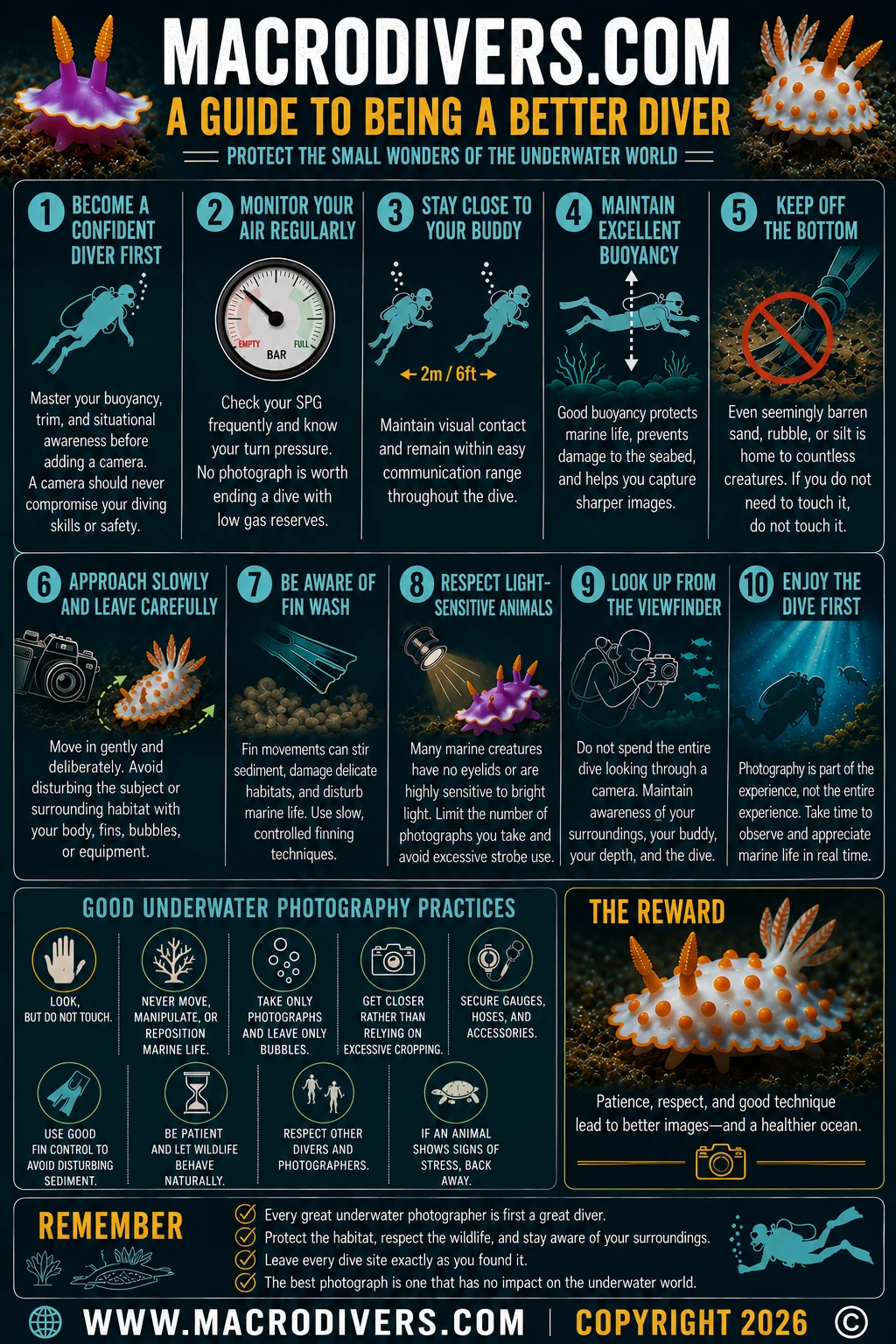
Practical habits that help protect marine life and make your photography easier.
Macro divers spend more time close to the seabed. That makes buoyancy, trim and fin control even more important than on a normal scenic reef dive.
Be comfortable in the water first. Master buoyancy, weighting, trim, air awareness and buddy contact before adding a camera to the dive.
Sand, rubble and grit may look empty, but they are habitats. Avoid kneeling, resting fins, dragging gauges or using the seabed as a platform.
Move in slowly, avoid fin wash, take your images calmly and back away without turning your fins over the subject.
Do not spend the whole dive staring through the viewfinder. Check your air, depth, no-stop time, buddy position and the wider dive environment.
If an animal moves away, closes up or shows signs of stress, back off. No image is worth disturbing wildlife.
If the answer to any of these is no, pause, reposition or leave the subject alone.
Once your diving is controlled and relaxed, continue to the Better Macro Photography guide.
Read Better Macro PhotographyImprove the diving first: buoyancy, trim, slow finning, awareness and breathing control. Once you can hold position without touching the bottom, macro photography becomes easier and safer.
Good trim keeps your fins, gauges and camera away from the reef or seabed. It also lets you approach small subjects calmly without stirring silt or disturbing the animal.
Get only as close as you can while staying stable and not changing the animal's behaviour. If the subject retreats, closes up or turns away, back off and give it space.
Frog kicks, modified flutter kicks, helicopter turns and gentle back kicks are useful because they reduce silt disturbance and allow small position changes without using your hands.
Stay neutrally buoyant, keep your fins up, secure dangling equipment, avoid touching the bottom and take time to plan your approach before lifting the camera.
Practise hovering, slow descents, controlled breathing, back kicks, non-silting turns, buddy awareness and handling your camera without losing buoyancy or trim.