Weight yourself correctly
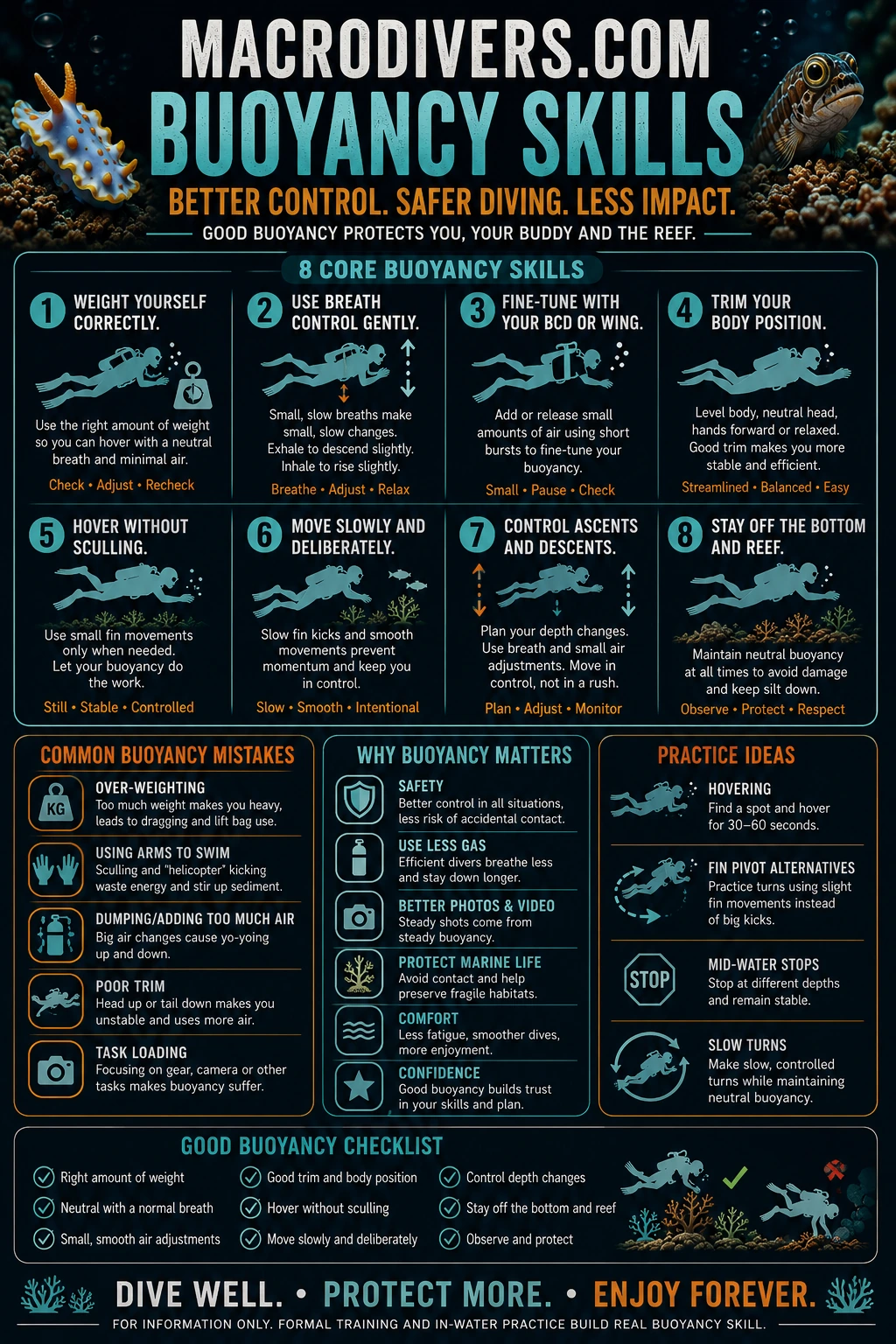
Use enough weight to descend and hold a stop, but not so much that you become heavy and unstable.
Academy > Diving Skills
Better control. Safer diving. Less impact.
Buoyancy is one of the core skills behind safe, relaxed and low-impact diving. It affects gas use, comfort, photography, buddy awareness and the amount of disturbance you create underwater.
For macro diving, buoyancy matters even more because you are often close to fragile habitats and tiny animals. Small mistakes can kick up silt, damage the bottom or stress the subject.
The goal is calm control: correct weighting, balanced trim, gentle breath control, small BCD adjustments and slow deliberate movement.
Small improvements in control make a big difference underwater.
Use enough weight to descend and hold a stop, but not so much that you become heavy and unstable.
Small, slow breaths create small depth changes. Avoid big breathing swings when close to the bottom.
Add or release small amounts of air and pause before adjusting again. Avoid yo-yo diving.
A horizontal, balanced body position makes movement easier and reduces accidental contact.
If your hands or fins are constantly moving, your buoyancy is doing less work than it should.
Plan depth changes, move slowly and monitor buoyancy before the change becomes a problem.
A camera, torch or slate adds task loading. If basic buoyancy is not stable before the camera comes out, it usually gets worse once attention narrows to the subject.
Practice hovering, slow turns, mid-water stops and fin-pivot alternatives away from fragile habitats. Build control in easy conditions before expecting it to hold in current, low visibility or close-focus photography.
Good buoyancy is not about looking perfect. It is about staying safe, protecting the site and being relaxed enough to notice what is happening around you.
These pages are for information and skill awareness only. They do not replace formal scuba training, in-water coaching, professional instruction, local dive briefings or good judgement. Practise new skills with a qualified instructor or experienced mentor in suitable conditions.
These skills work together. Good buoyancy, responsible behaviour and camera awareness make safer, calmer and lower-impact macro dives.
Responsible Muck Diving Camera Awareness Back to Diving Skills & Safety