Serious incident kit
Emergency oxygen, pocket mask or BVM if trained, AED access, thermal protection and a way to record observations.
Diving Skills & Safety
A practical guide to thinking about first aid capability for dive boats, resorts and travel rather than just ticking off kit lists.
A dive first aid kit should match the diving you are doing, where you are doing it and who is trained to use it. A perfect kit that nobody can find or use is not a useful kit.
For dive travel, the kit should support common minor problems and serious first response priorities until professional help takes over. It should be checked before travel, before boat departure and after any use.
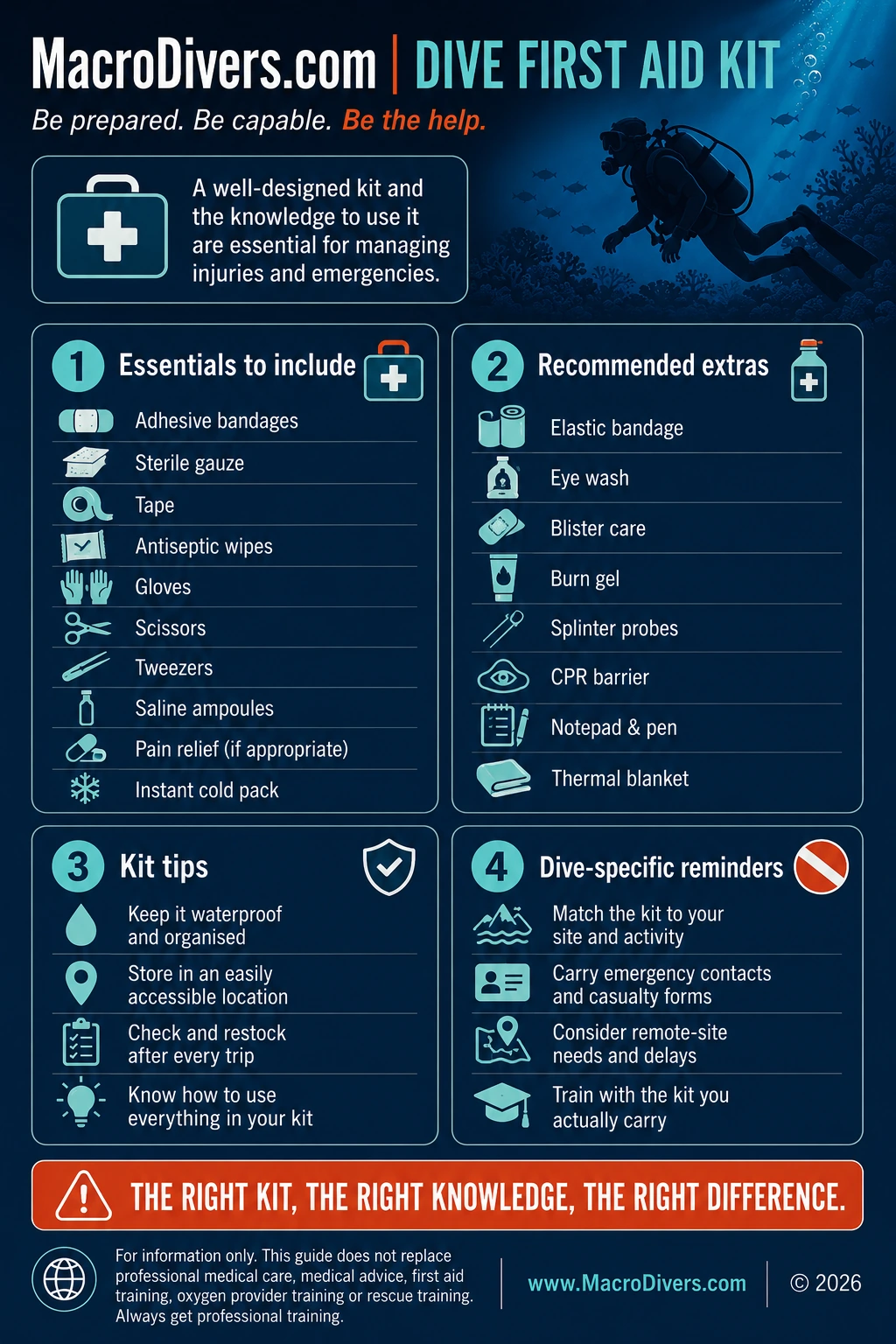
Exact contents depend on training, local rules and the dive environment.
Emergency oxygen, pocket mask or BVM if trained, AED access, thermal protection and a way to record observations.
Dressings, bandages, sterile saline, gloves, wound cleaning supplies and items for controlling bleeding.
Hot-water plan for some venomous stings, tweezers, irrigation supplies and protection from further contact.
Sun protection, hydration support, blankets, shade plan and dry clothing for cold or exposed casualties.
Divers should know where their own medication is kept and tell a buddy or trip leader if it may be needed urgently.
Emergency numbers, insurance details, DAN contact route, casualty notes, pen, waterproof bag and charged phone or radio.
Ask three simple questions: where is the kit, who can use it, and is it ready now? Check oxygen pressure, masks, expiry dates, gloves, dressings, AED access and how the team will communicate if the incident happens away from the resort or main boat.
If you are carrying medication or specialist first aid items, make sure they are legal and suitable for the country you are visiting. Keep personal medication separate, clearly named and easy to find.
This page is for information only. It is not medical advice and it does not replace professional medical care, formal first aid training, oxygen provider training, rescue training or local emergency procedures. Always get professional training and follow the advice of qualified medical and diving professionals.