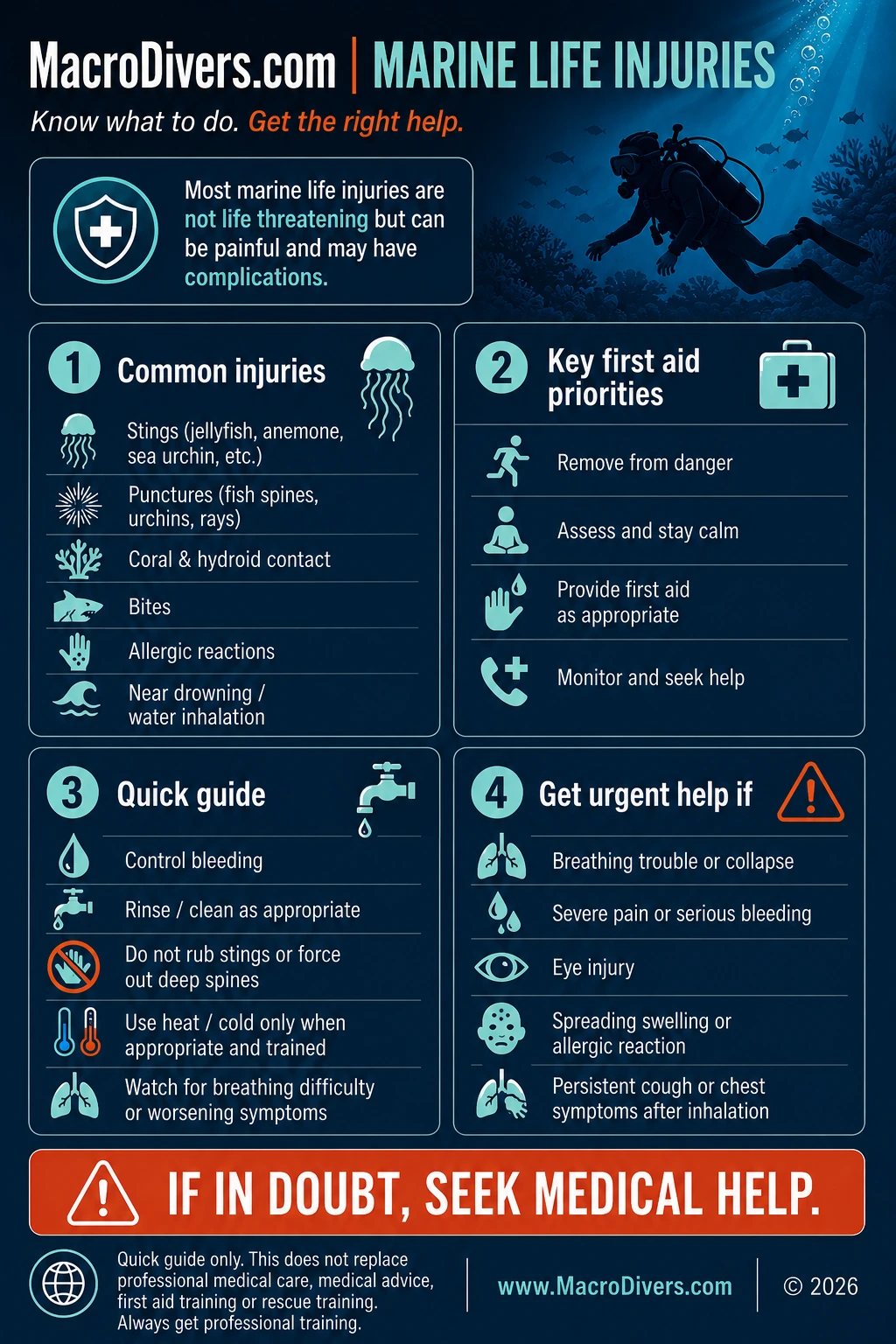
Stings and venom
Examples: jellyfish, fire coral, hydroids, some
anemones, lionfish or other venomous spines.
Basic first aid: stop the dive, move the
casualty away from the animal, reassure them and monitor
breathing. Rinse jellyfish or hydroid contact with seawater
rather than fresh water. For many tropical stings, local
guidance may recommend vinegar; for painful venomous spine
injuries, hot water immersion can help pain if it can be done
safely.
Get help fast if: pain is severe, the sting
covers a large area, symptoms spread, there is chest pain,
collapse, breathing difficulty, facial swelling or any concern
about an allergic reaction.
Punctures and spines
Examples: sea urchin spines, stingray wounds,
fish spines, sharp shells or coral points.
Basic first aid: control bleeding, rinse the
area with clean water when available, cover with a sterile
dressing and avoid digging for deeply embedded material. Remove
only obvious loose surface fragments if you can do so easily and
safely.
Get help fast if: a spine is deep, near a
joint, in the hand, foot, face or genitals, bleeding is
difficult to control, pain is severe or the wound may need
professional cleaning, X-ray, tetanus advice or antibiotics.
Coral and hydroid contact
Examples: coral cuts, fire coral irritation,
hydroid rash, reef abrasions.
Basic first aid: rinse away seawater
contamination, clean the abrasion thoroughly, remove visible
grit only if easy, and cover with a clean dressing. For fire
coral or hydroid-type stinging, vinegar may help stop unfired
stinging cells where locally recommended.
Get help fast if: the rash spreads, blisters
are extensive, pain increases, the wound is dirty or deep, or
signs of infection appear over the next hours or days.
Bites
Examples: eel, triggerfish, octopus, fish bite
or other defensive contact.
Basic first aid: end the dive, control bleeding
with firm direct pressure, irrigate the wound well when safe,
cover with a sterile dressing and treat the casualty for shock
if needed. Keep the casualty calm and still.
Get help fast if: bleeding is heavy, tissue is
torn, there is loss of function, the bite is to the hand or
face, the animal may be venomous, or there is any chance that
deeper structures are involved.
Near drowning and water inhalation
Examples: a diver or snorkeller who has been
underwater unexpectedly, inhaled water, coughed violently after
surfacing, lost consciousness in water, or needed rescue from
fresh water or salt water.
Basic first aid: protect yourself first, get
help, remove the casualty from the water only if it is safe, and
assess responsiveness and breathing. If they are unresponsive
and not breathing normally, start CPR and use an AED as soon as
available. If you are trained and able, drowning resuscitation
should include rescue breaths because the primary problem is
lack of oxygen.
Fresh or salt water: the first aid priorities
are the same. Do not waste time trying to drain water from the
lungs. Focus on airway, breathing, CPR if needed, oxygen if
trained and available, keeping the casualty warm, and urgent
medical assessment.
Get help fast if: the person was rescued from
water, was unconscious, stopped breathing, needed rescue breaths
or CPR, has persistent coughing, breathlessness, chest pain,
confusion, blue/grey colour, extreme tiredness, worsening
symptoms or feels unwell after the incident.
Allergic reactions
Examples: unusual reaction after a sting, rash,
swelling or known allergy.
Basic first aid: stop exposure, monitor airway
and breathing, help the casualty use their own prescribed
medication if they have it, and keep them under observation. Do
not leave them alone.
Get help fast if: there is wheeze, breathing
difficulty, throat tightness, swelling of the lips, tongue or
face, faintness, confusion, widespread rash or rapid
deterioration. Treat this as a medical emergency.
Infection risk
Examples: any cut, scrape, puncture or bite
exposed to seawater, boat decks, sand or contaminated kit.
Basic first aid: clean the wound properly,
cover it, keep it clean and dry after the dive, and check it
regularly. Record what happened, where it happened and what
first aid was given.
Get help fast if: redness spreads, heat,
swelling, pus, fever, red tracking lines, worsening pain,
numbness or reduced movement develops. Do not dismiss a
worsening seawater wound as "just a scrape".