Feeding
Many nudibranchs are specialist feeders, eating sponges, hydroids, tunicates, soft corals or other small animals. Finding the food source often helps narrow down the identification.
Nudibranch Basics
Feeding, mating, egg laying, defence and movement - the behaviours that turn a pretty subject into a real natural history story.
Nudibranchs are often photographed as colourful portraits, but their behaviour is what makes them truly fascinating. Learning what they are doing helps with identification, improves your photography and makes your sightings more meaningful.
Reference Diagram
This infographic brings together the six main behaviour themes on this page: feeding, mating, egg laying, defence, camouflage and mimicry, and swimming.
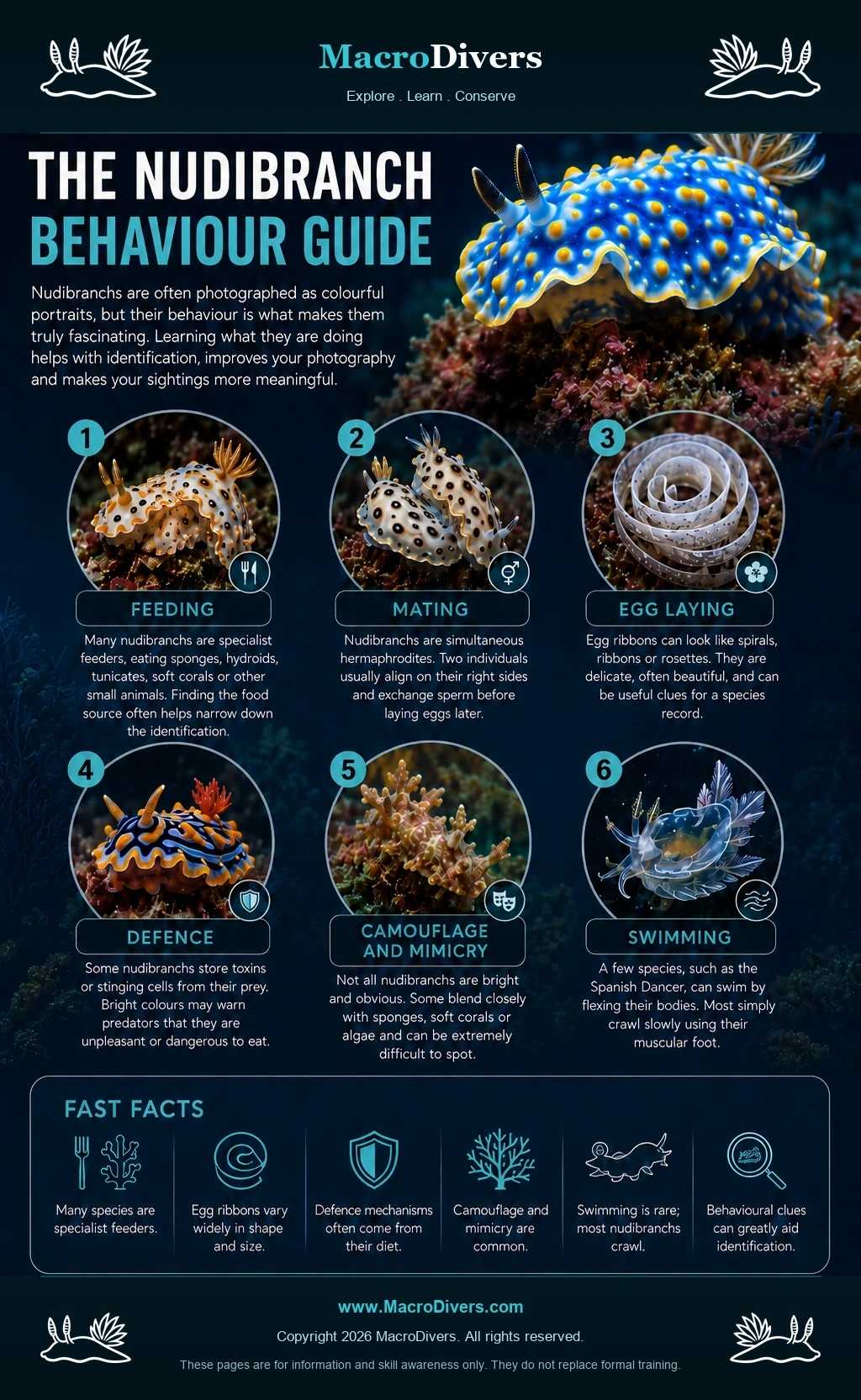
Many nudibranchs are specialist feeders, eating sponges, hydroids, tunicates, soft corals or other small animals. Finding the food source often helps narrow down the identification.
Nudibranchs are simultaneous hermaphrodites. Two individuals usually align on their right sides and exchange sperm before laying eggs later.
Egg ribbons can look like spirals, ribbons or rosettes. They are delicate, often beautiful, and can be useful clues for a species record.
Some nudibranchs store toxins or stinging cells from their prey. Bright colours may warn predators that they are unpleasant or dangerous to eat.
Not all nudibranchs are bright and obvious. Some blend closely with sponges, soft corals or algae and can be extremely difficult to spot.
A few species, such as the Spanish Dancer, can swim by flexing their bodies. Most simply crawl slowly using their muscular foot.
Take the portrait first, then look for behaviour. Feeding, mating, egg laying and interaction with habitat can turn a nice nudibranch photo into a genuinely useful natural history record.