Nudibranchs often look like slow-moving jewels on the reef, but
their life cycle is surprisingly dynamic. Many begin life as tiny
drifting larvae before settling onto the seabed, changing body form
and growing into the colourful adults divers love to photograph.
Reference Diagram
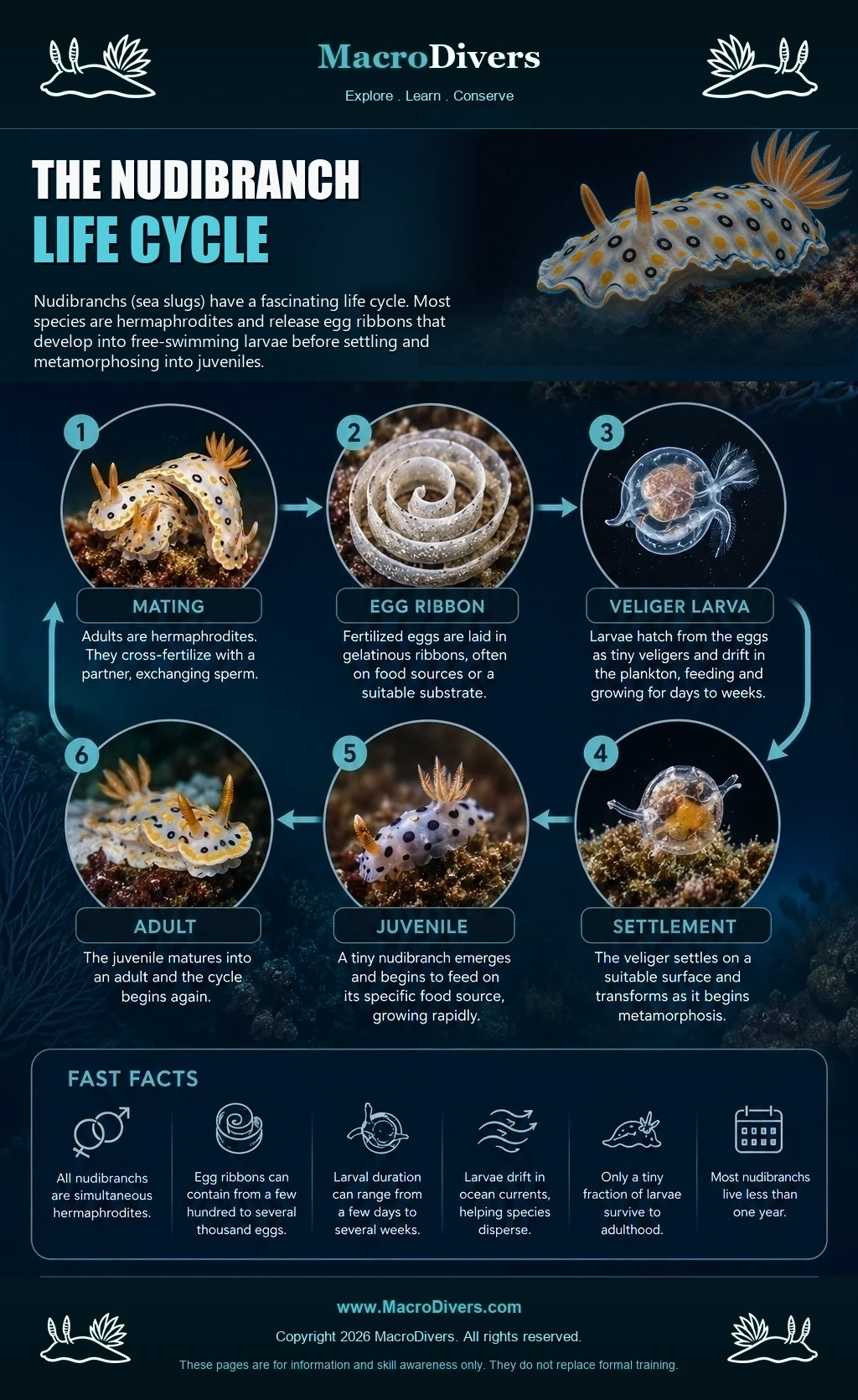
Life cycle overview.
This infographic pulls the whole cycle together: mating, egg
ribbons, veliger larvae, settlement, juvenile growth and adult
nudibranchs.
The photographs below show two of the most useful behaviour records
for divers and photographers: mating and egg laying. These images
tell far more of the animal's life story than a single portrait.
1
Mating
Adult nudibranchs are hermaphrodites, meaning each individual
has both male and female reproductive organs. They still usually
need a partner, and many pair side by side to exchange sperm.
For divers, mating behaviour can be easy to miss because it may
look like two animals simply sitting close together.
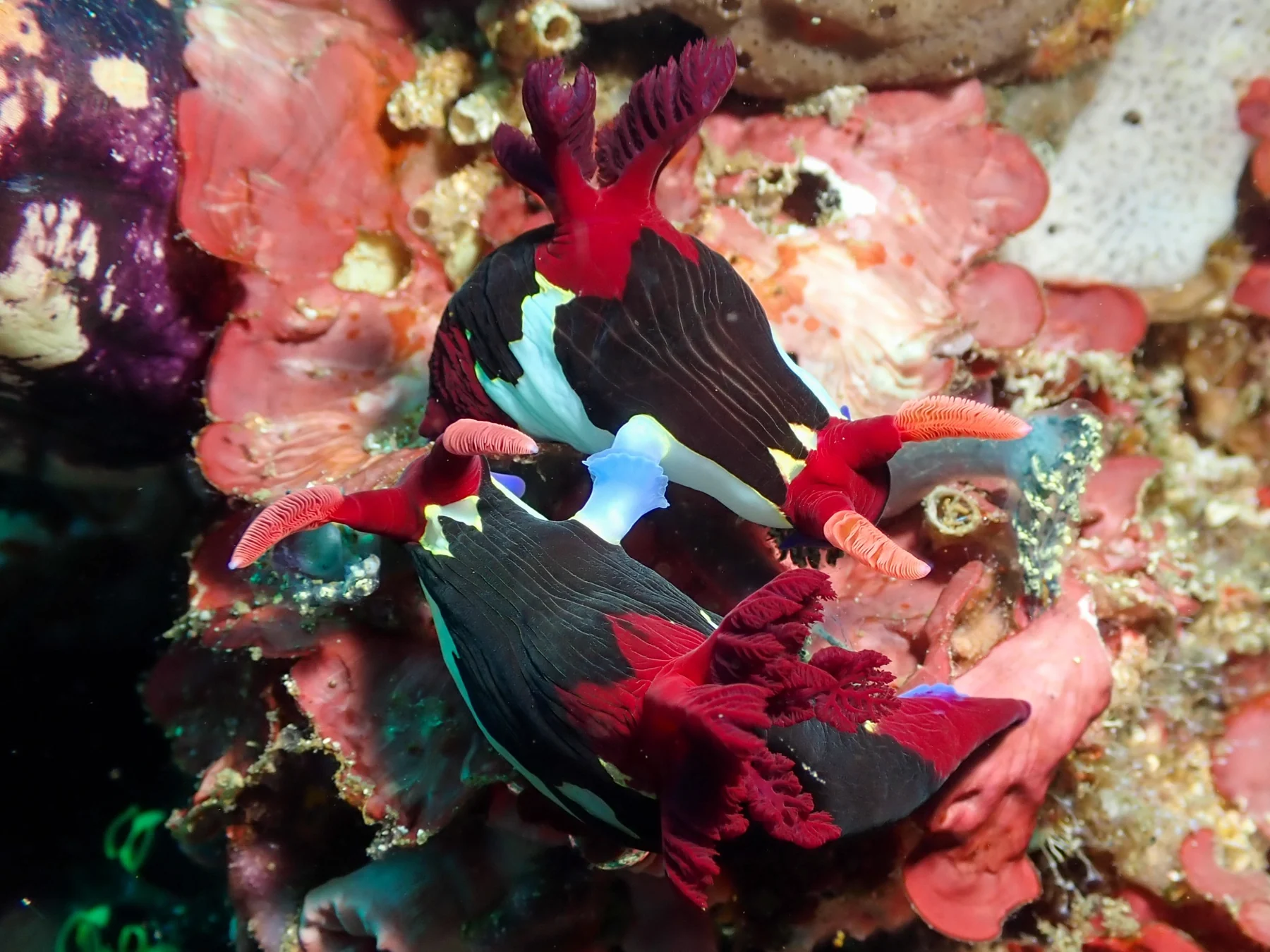
Mating pair. Most nudibranchs are
simultaneous hermaphrodites and exchange sperm with a partner.
Finding mating pairs underwater can often lead you to egg
ribbons nearby.
2
Egg ribbons
After mating, many nudibranchs lay eggs in ribbons, coils or
rosette-shaped masses. These often look like tiny flowers or
spirals attached to reef, algae, sponge or other surfaces.
Egg ribbons can be beautiful macro subjects, but they are
delicate and should never be touched or moved for a photograph.
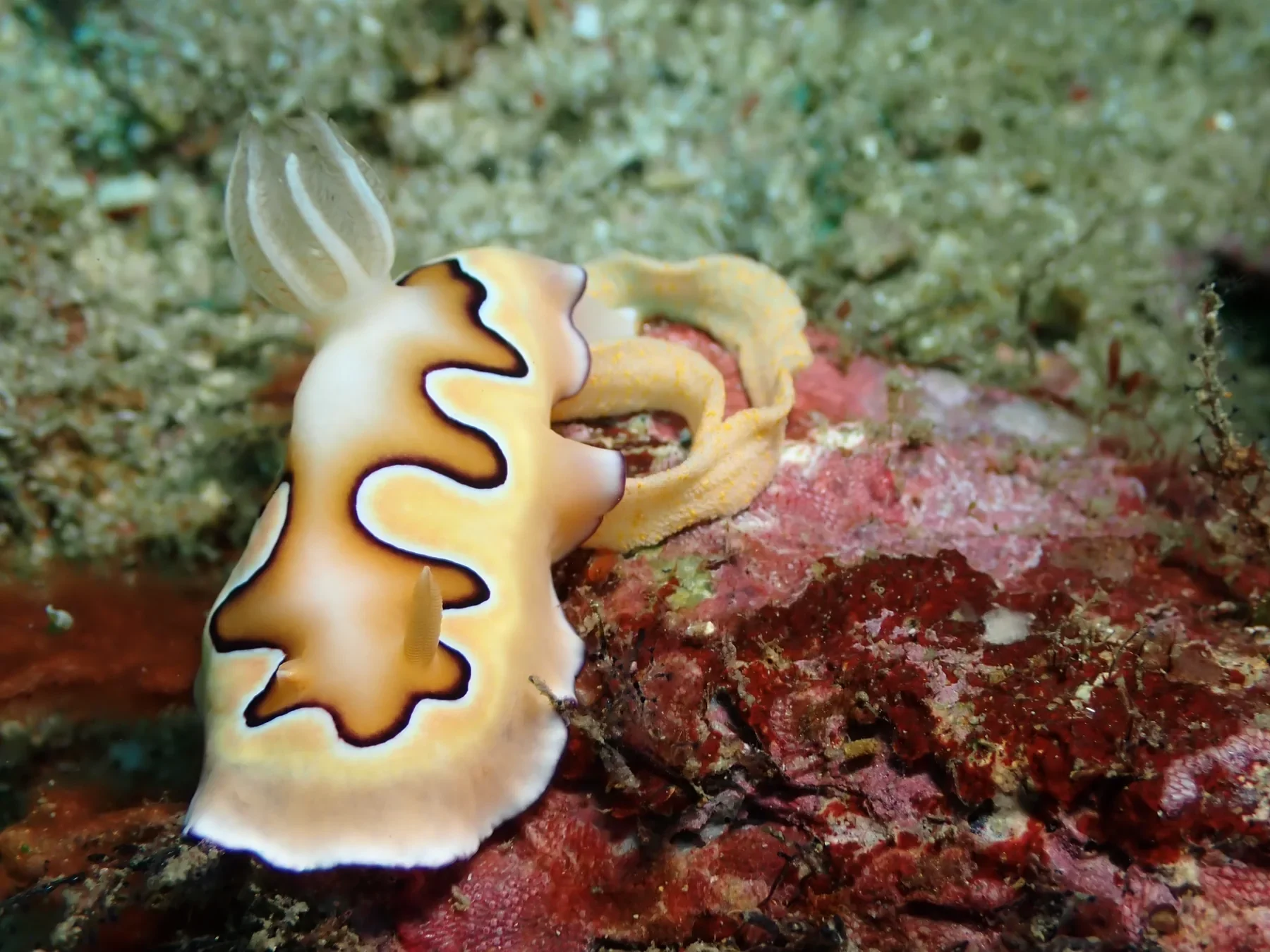
Egg laying. Egg ribbons are often
species-specific in shape and colour. Some nudibranchs lay
tight spirals, while others create broad rosettes or ribbons.
3
Developing embryos
Inside the egg mass, embryos develop in protective capsules.
Depending on species and conditions, this stage may last days to
weeks.
Water temperature, food availability and local conditions can
influence development time.
4
Free-swimming larvae
Many nudibranchs hatch as microscopic larvae known as veligers.
These can drift in the plankton before finding a suitable place
to settle.
This drifting stage helps nudibranchs spread to new areas,
although many larvae will not survive to adulthood.
5
Settlement and metamorphosis
When the larva finds the right habitat, often linked to the
correct food source, it settles and begins metamorphosis.
This is one of the most fascinating stages: the animal changes
from a drifting larva into a crawling juvenile adapted for life
on the seabed.
6
Juvenile growth
Juvenile nudibranchs feed and grow, gradually developing the
colours, patterns and body structures seen in adults.
Some juveniles look quite different from adults, which can make
identification especially challenging.
7
Adult life
Adult nudibranchs continue feeding, growing and reproducing.
Many have short life spans, often measured in months rather than
years.
Their adult appearance is shaped by species, diet, habitat and
sometimes the defences they acquire from prey.
8
Why food matters
Many nudibranchs are closely linked to specific prey such as
sponges, hydroids, tunicates or algae. Finding the right food
source can be essential for survival.
This is why experienced guides often search particular
substrates rather than simply looking across open reef.
Photography note
Egg ribbons, juveniles and feeding behaviour all tell part of the
life cycle story. Photographing these details alongside adult
animals makes a species record much more useful than a single
portrait alone.