1. Make the scene safe
Stop further diving, secure the casualty, keep the boat or shore team organised and avoid creating a second casualty.
Diving Skills & Safety
A practical overview of why emergency oxygen matters in diving incidents and what divers should check before they need it.
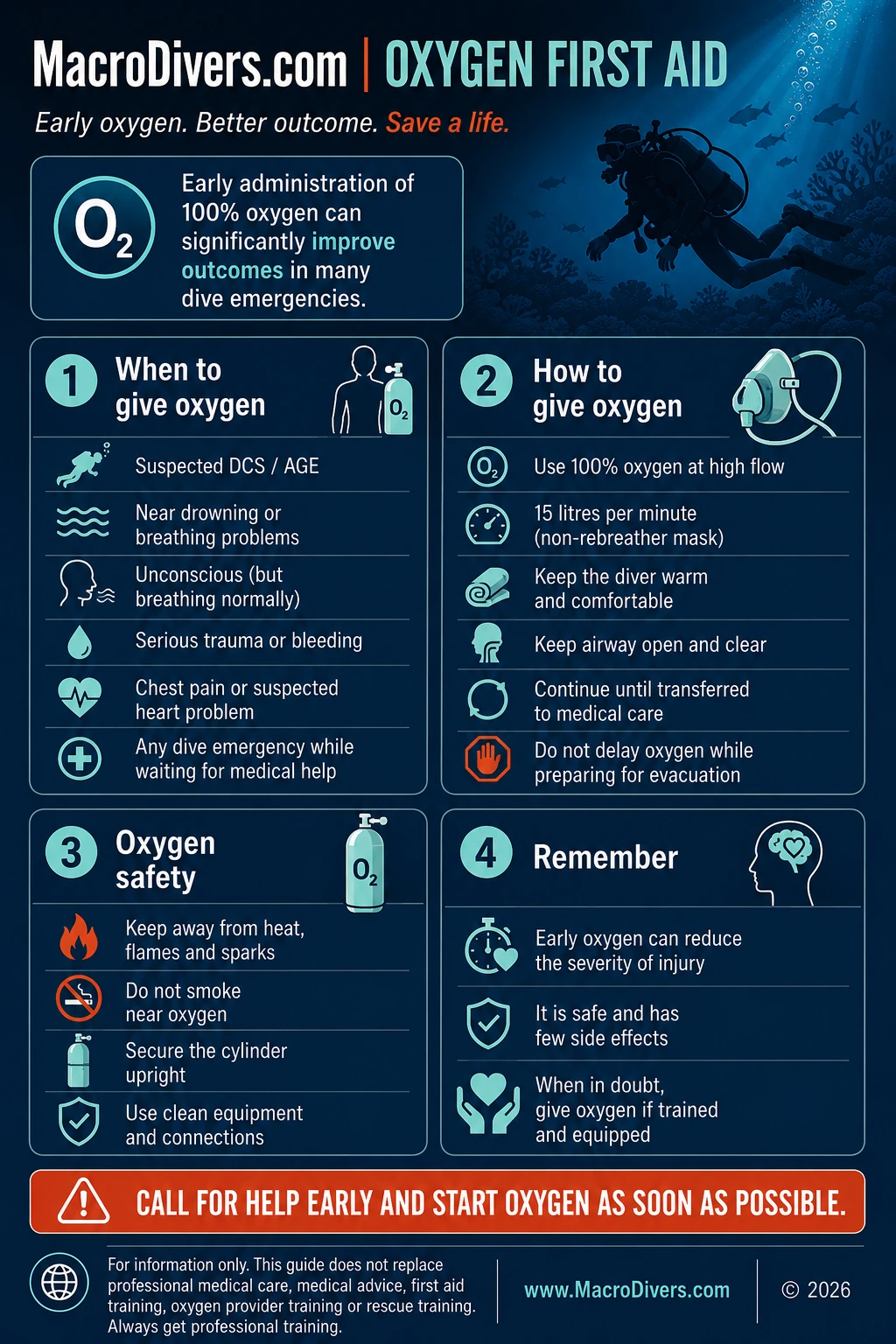
For a suspected diving injury, emergency oxygen is one of the most important first aid interventions a trained provider can deliver while evacuation and medical advice are being arranged.
Oxygen first aid is not a diagnosis and it is not a replacement for recompression or medical care. It buys time, supports the casualty and should be started early by someone trained and equipped to use the system safely.
Think in terms of scene safety, assessment, oxygen, monitoring and escalation.
Stop further diving, secure the casualty, keep the boat or shore team organised and avoid creating a second casualty.
Check responsiveness, airway, breathing and circulation. Start CPR and use an AED if the casualty is unresponsive and not breathing normally.
Use the most suitable oxygen delivery method available and follow your training. Aim for continuous high-concentration oxygen while help is arranged.
Contact local emergency services, the dive operator, coastguard or chamber pathway as appropriate. Contact DAN or local diving medical advice where available.
Write down dive profiles, gases, symptoms, timings, first aid given and changes in condition. This helps the receiving medical team.
Keep the casualty warm, still and reassured. Reassess regularly and give a clear handover to emergency responders.
Oxygen is only useful if it is present, full, accessible and someone knows how to use it. Before a dive day, check where the kit is, who is trained, what masks and regulators are available, how much oxygen is carried and how long it will last at expected flow rates.
For remote locations, do not assume oxygen will be nearby. Ask the operator directly. A good emergency plan includes oxygen, communication, evacuation route, nearest medical support and chamber contact pathway.
DAN describes emergency oxygen as preferred first aid for scuba diving injuries and emphasises early administration by trained responders. UK HSE diving guidance also expects suitable first aid provision and oxygen administration equipment for diving operations.
This page is for information only. It is not medical advice and it does not replace professional medical care, formal first aid training, oxygen provider training, rescue training or local emergency procedures. Always get professional training and follow the advice of qualified medical and diving professionals.